
If you have ever started researching how to update an old tub, shower, or tile wall, you have probably seen two words used everywhere: reglazing and refinishing. Many homeowners assume they are completely different services. Others use the terms interchangeably and hope they are asking for the right thing.
After more than 15 years in this industry, confusion is widespread. The good news is that in the context of tubs, showers, and tile, reglazing and refinishing usually mean the same thing. The difference is less about what is actually done to your tub and more about how the work is described and marketed.
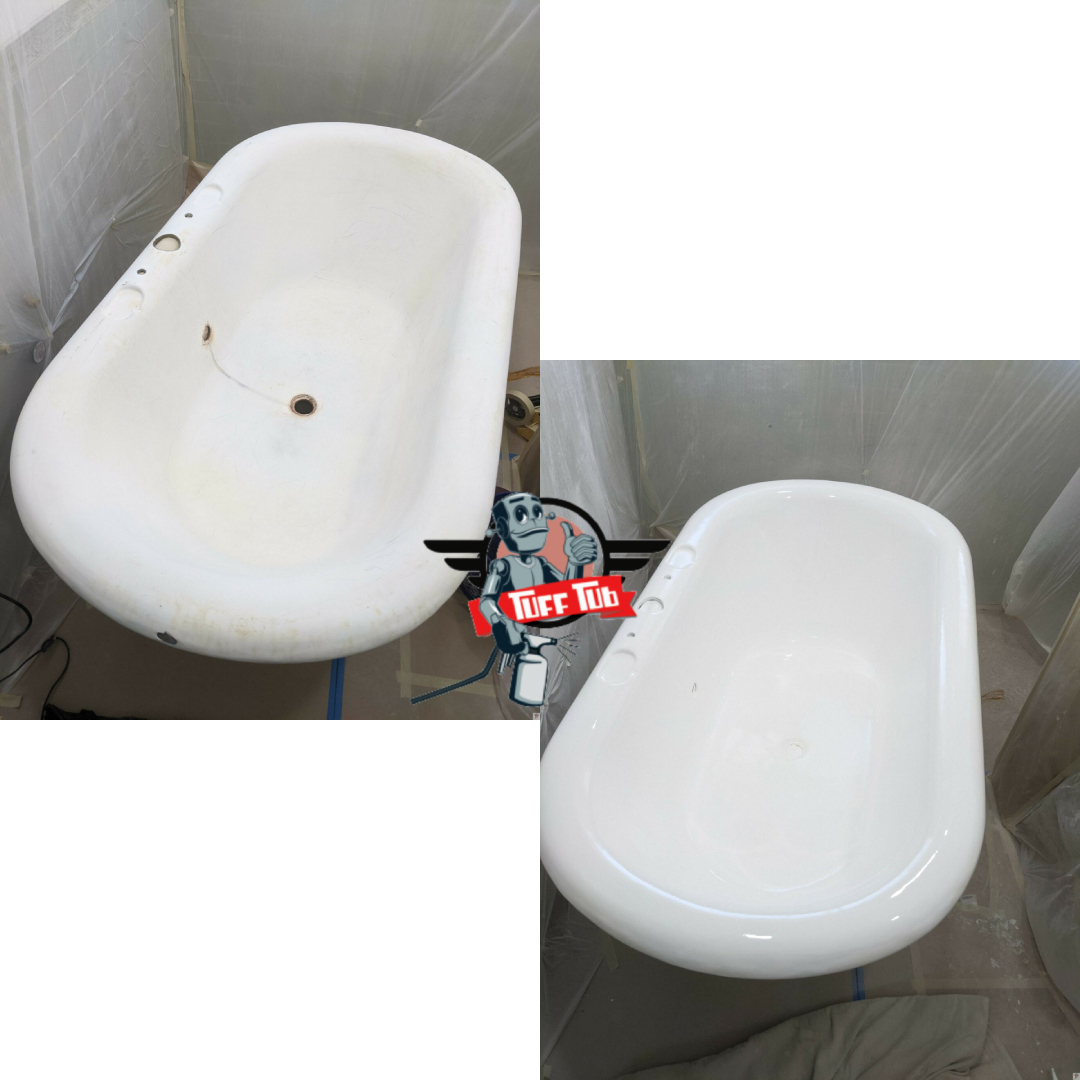 This article will walk you through what these terms really mean, why we chose “refinishing” for our company name, and what you should know as a homeowner before you hire anyone to work on your bathroom surfaces.
Do Reglazing and Refinishing Mean the Same Thing?
In most online searches and contractor descriptions, reglazing and refinishing both refer to the process of restoring the surface of a tub, shower, or tile so that it looks clean, smooth, and glossy again. The goal in either case is to give an old, stained, or worn surface a fresh, like-new appearance without the cost and mess of a complete replacement.
Because so many people have heard the term “tub reglazing,” they naturally use it when searching for companies. Over time, the industry continued to use both terms so homeowners could find the services they needed, no matter which term they typed into a search.
From a practical, everyday standpoint for the homeowner, reglazing and refinishing describe the same type of service.
Why The Word “Reglazing” Can Be Misleading
Although the term is used interchangeably today, “reglazing” originated in the pottery and ceramics industry. In that context, glazing means applying a special coating to a ceramic piece and then firing it in a very hot kiln so the finish becomes extremely hard, glass-like, and permanently bonded.
Of course, that kind of process can never happen inside your home. Your tub or tile is not going into an oven. There is no baking in a step. For that reason, using the word “reglazing” can give the wrong impression that your new surface is identical to the original baked-on porcelain or ceramic glaze. It is not. It is a high-quality on-site coating, not a factory-kiln-fired finish.
That is one of the main reasons I prefer the term refinishing. It better describes what we actually do inside your home.
Why We Chose “Refinishing” For Our Company Name
When my son and I started Tuff Tub Refinishing, we spent some time thinking about how we wanted to describe our work. We considered calling the business “Tuff Tub Reglazing” because that is a popular term people use online. In the end, we decided that “refinishing” was the most honest and accurate word for our process.
Refinishing clearly indicates that we are giving an existing surface a new finish. Most homeowners already understand the idea from car painting or wood furniture restoration. There is no suggestion that your tub or shower is undergoing a factory-style baking process.
From a marketing point of view, we still mention “reglazing” on our website and in online advertising for a simple reason. Many people still type “tub reglazing” into Google when they want the work done. If people ever stop searching for that word, we would be happy to stop using it. Until then, we use it only as a way to connect customers to the refinishing services they are actually looking for.
What Really Happens During A Refinishing Project?
So, what does refinishing mean in practical terms when we work on your tub, shower, or tile?
At Tuff Tub Refinishing, our process involves applying a high-end polyurethane resin that is sprayed onto the surface, much like a car is painted in a professional body shop.
Here is a simple overview of what we do:
- Prepare the work area: We create the cleanest, most contained environment possible. We use plastic sheeting to protect surrounding areas and set up an exhaust fan to vent overspray and fumes outside.
- Clean and prepare the surface: Proper bonding starts with proper preparation. We thoroughly clean the tub, shower, or tile and prepare the existing surface so the new coating adheres correctly.
- Apply a primer: A quality primer helps the finish coat grip the surface and improves durability and appearance.
- Spray the polyurethane resin.: We then spray multiple coats of our polyurethane resin, building up a smooth, even finish. This material is designed to be both attractive and durable, with a glossy look that closely resembles the original finish.
When done correctly, the refinished surface looks fresh, clean, and bright. It can dramatically improve a bathroom’s appearance without the cost and disruption of tearing out and replacing fixtures or tile.
How Strong Is A Refinished Surface?
It is essential to understand that a refinished surface is not quite as complex or scratch-resistant as the original ceramic or porcelain glaze that was baked on in a factory. Because we are not using a kiln, we cannot exactly duplicate that original glass-like hardness.
That does not mean refinishing is fragile. With proper care, a refinished tub or shower can last many years and continue to look beautiful. It simply means you must treat it more like a painted surface rather than like raw ceramic or porcelain.
A helpful comparison is to think of the finish on your car. You would never scrub your car with harsh abrasives because you know it would dull the shine and create scratches. The same idea applies to your refinished tub, shower, or tile.
How To Care For A Refinished Tub, Shower, or Tile Wall
To keep your refinished surface looking its best for as long as possible, use the same gentle care you would on a car finish.
- Avoid abrasive cleaners. Do not use products like Comet, Ajax, or any powder or cream cleanser that feels gritty. These will scratch the surface and gradually dull the gloss.
- Use a soft sponge or cloth. Skip abrasive pads. A soft sponge and non-abrasive soap, or a mild bathroom cleaner, are usually all you need for regular cleaning.
- Rinse thoroughly. After cleaning, rinse away any remaining soap or cleaner to prevent residue buildup.
- Clean regularly. Regular light cleaning is better than harsh deep cleaning once the dirt has built up. Keeping on top of soap scum and mineral deposits will help preserve the finish.
When you treat your refinished surface with care, it will remain bright and attractive for a long time.
Final Thoughts And How To Reach Us
In the end, while “reglazing” and “refinishing” are often used interchangeably, the process we perform in your home is more accurately described as refinishing. We clean, prepare, prime, and spray a high-quality polyurethane resin to restore a fresh, glossy look to your existing tub, shower, or tile. There is no baking, no kiln, and no factory oven involved.
Our goal at Tuff Tub Refinishing is not only to provide quality work but also to be a trusted resource. If you ever feel unsure about terminology or want help understanding your options. In that case, we are happy to explain the process in simple, straightforward language so you can make an informed decision.
If you have questions about refinishing your tub, shower, or tile, or you would like a quote, feel free to call me directly at (714) 307-6885. We will do our best to answer your questions and guide you to the solution that best fits your home and budget.